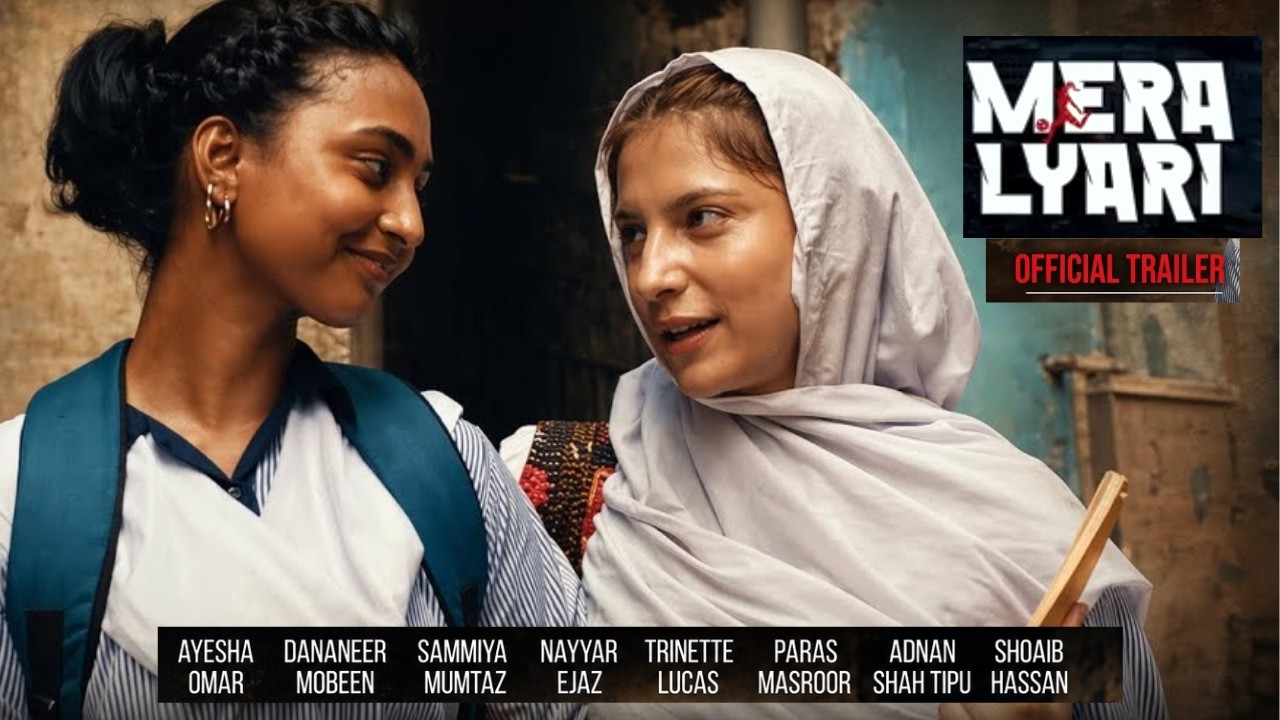
The Pakistani film industry has hit a historic low with its latest theatrical release, Mera Lyari on May 8 2026. Directed and written by the highly prolific Abu Aleeha and executive produced by Ayesha Omar under Hawks Bay Studios, the film was loudly championed by provincial authorities as a monumental cultural counter-punch to cross-border narrative warfare. Instead, it has earned the unfortunate title of the flopest movie of Pakistan in 2026.
Despite featuring a star-studded ensemble cast including star Dananeer Mobeen, seasoned veterans Samiya Mumtaz, Nayyar Ejaz, and Adnan Shah Tipu, alongside Ayesha Omar herself the film crashed out completely. On its opening day, Mera Lyari reportedly sold only 22 tickets nationwide, forcing cinema owners to pull it from screens within 24 hours. The dynamic internet audience echoed this rejection, leaving the film sitting at a dismal IMDb rating of 2.6/10.
Is Cinema Culture Dead in Pakistan?
To understand why Mera Lyari collapsed so spectacularly, we have to look at the massive shift in how global and local audiences consume entertainment. Worldwide, the traditional cinema experience is rapidly evolving. Audiences are shifting their attention and wallets toward mainstream digital streaming giants like Netflix, Amazon Prime, and AMC+. Entertainment is now instantaneous, high-budget, and available right at home.
Unfortunately, the Pakistani film industry remains entirely left behind in this digital gold rush. Look closely at the major global platforms, and a glaring truth emerges. There is virtually zero original Pakistani movie on these tier-one international streaming platforms. Where India, South Korea, and Spanish-language markets sign multi-million dollar direct-to-streaming distribution deals.
A Complete Marketing Failure by Mera Lyari Team
A major reason Mera Lyari crashed so catastrophically is that it was essentially an invisible movie. For a film featuring some of the biggest names in the industry and backed by provincial authorities, the marketing was practically non-existent. There were no major press tours, no aggressive digital media campaigns, and no widespread trailer rollouts. The film was quietly slipped into a few theaters without any public buzz. Consequently, the vast majority of Pakistani cinema-goers did not even know a film called Mera Lyari had been made.
Mera Lyari vs Dhurandhar: The Misplaced Rivalry of Fights and Football
The ultimate irony of Mera Lyari is that it was heavily marketed as Pakistan’s official response to the Bollywood blockbuster Dhurandhar (starring Ranveer Singh). Dhurandhar was heavily criticized in Pakistan for its aggressive, anti-Pakistan agenda. The Indian spy thriller follows a highly stylized, fictionalized narrative of an Indian intelligence operative penetrating deep into Pakistan. Weaving an intense web of espionage, covert ops, and heavily nationalistic propaganda.
Dhurandhar drew direct narrative inspiration from real, violent elements of Karachi’s past. Incorporating fictionalized arcs reminiscent of the famous late police commander Chaudhry Aslam and the notorious underworld figure Rehman Dekait. In an attempt to counter this negative depiction. The Sindh Information Ministry backed Abu Aleeha’s vision to show a different side of Karachi. Rather than matching the explosive action of an espionage thriller, Mera Lyari attempted to fight back with an entirely different weapon. Underdog sports and female empowerment.
The movie centers on Afsana (played by Dananeer Mobeen), a passionate young girl from the historic neighborhood of Lyari. Who dreams of playing professional football. She joins forces with Behnaz (Ayesha Omar), a former national star coach trying to escape her own history of domestic trauma. Together, they fight structural oppression, conservative family mindsets, and local neighborhood villains (like Adnan Shah Tipu) to get the girls onto the football pitch.
Fianl Verdicts
The historic failure of Mera Lyari is a stark warning for Pakistani cinema. It proves that local audiences will no longer show up just for big names or anti-propaganda themes. In an era dominated by high-quality global streaming platforms, the industry must prioritize strong scripts and premium production value. Until Pakistani filmmakers elevate their storytelling to compete on the international stage, empty theaters and historic flops will unfortunately remain the norm.