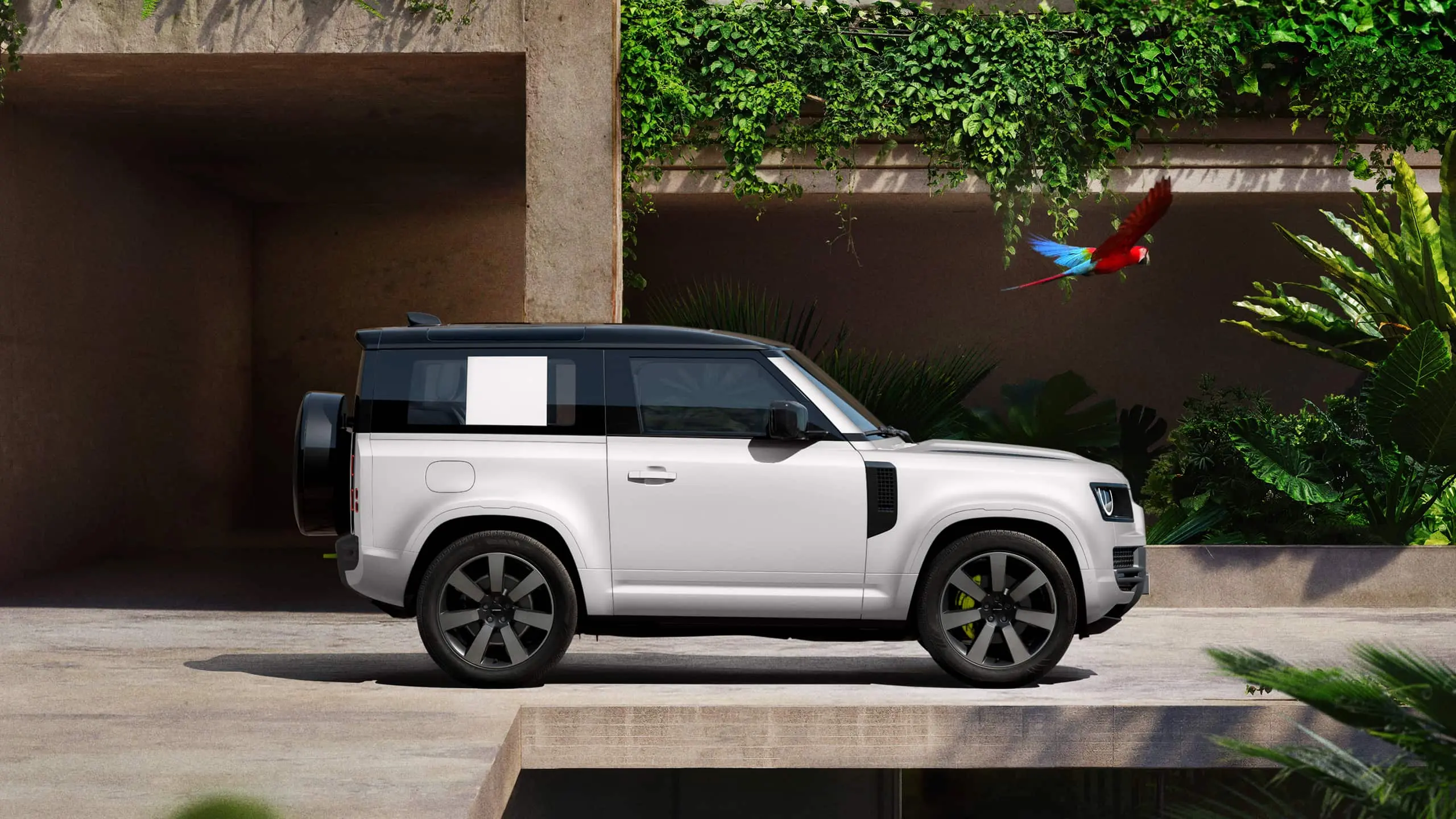
The Land Rover Defender 90 is one of the most recognizable compact luxury off-road SUVs on the market. Its short wheelbase, two-door body, upright design and serious four-wheel-drive hardware give it a character that is difficult to reproduce with a conventional luxury SUV.
But the Defender 90 is no longer simply a rugged utility vehicle. The modern version combines genuine off-road capability with premium materials, advanced driver assistance, powerful engines and a level of customization that can push its price well beyond that of traditional off-roaders.
For the 2027 model year, the Defender family has also received important changes, including a new Vertex model and a revised powertrain lineup. The Defender 90 starts around the low-$60,000 range in the U.S., although destination charges, options and higher trims can push the final transaction price considerably higher.
So, is the Land Rover Defender 90 worth the money? And why does a relatively small two-door SUV cost so much?
Let’s break it down.
What Is the Land Rover Defender 90?
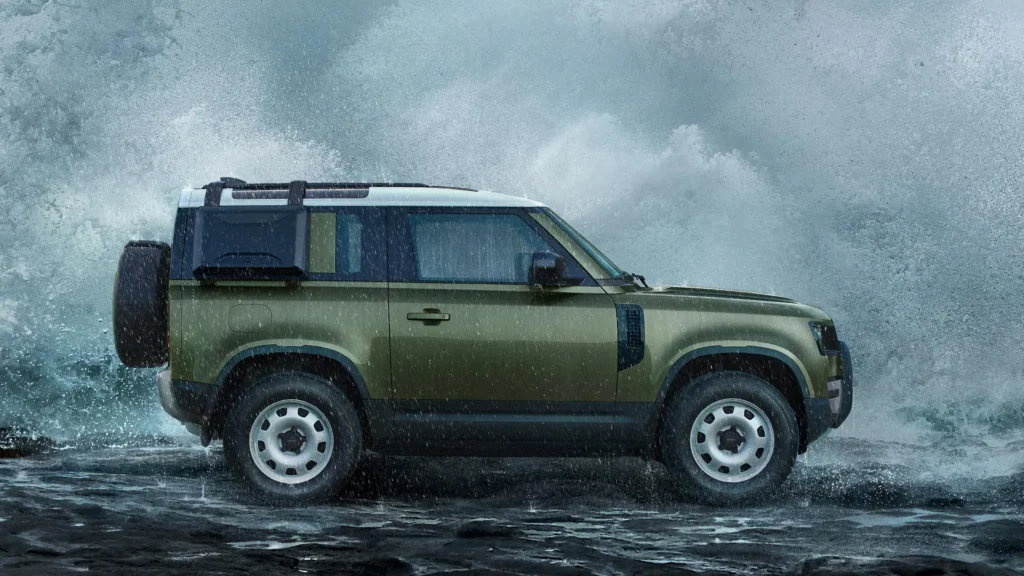
The Defender 90 is the short-wheelbase version of the modern Land Rover Defender. Unlike the larger Defender 110 and Defender 130, the 90 emphasizes compact dimensions and maneuverability.
The number “90” is rooted in Land Rover’s historic naming system and refers broadly to the vehicle’s short-wheelbase configuration. The modern Defender 90 keeps that compact philosophy while adding modern luxury and technology.
The result is an unusual combination: a vehicle that can look at home outside a luxury hotel but is also engineered to tackle difficult trails.
Land Rover’s U.S. site currently describes the Defender 90 as a two-door model with seating for up to five and lists cargo capacity of up to 58.3 cubic feet, depending on configuration.
That compact body is actually one of the biggest reasons people choose the 90 over its larger siblings.
Land Rover Defender 90 at a Glance
| Specification | Defender 90 |
| Body style | Short-wheelbase SUV |
| Doors | 2 |
| Seating | Up to 5 |
| Drivetrain | AWD / 4WD system |
| Transmission | 8-speed automatic |
| Current U.S. starting price | Around $61,000 before destination, taxes and fees |
| Maximum available power | Up to 395 hp on current standard Defender 90 specifications |
| 0–60 mph | As quick as 5.7 seconds in configurations listed by Land Rover |
| Cargo capacity | Up to 58.3 cu. ft. |
| Off-road hardware | Terrain Response, low range and electronic traction systems |
| U.S. availability | Yes |
Specifications vary by model year and trim, so buyers should verify the exact configuration before ordering. Land Rover itself notes that specifications and availability can vary by market and model year.
Why the Defender 90 Is Different From the Defender 110
The easiest way to understand the Defender 90 is to forget about size for a moment and think about proportions.
The Defender 110 and 130 prioritize passenger and cargo space. The 90 prioritizes maneuverability, visual impact and a more concentrated off-road footprint.
The shorter body can be an advantage on narrow trails because there is less vehicle extending behind the rear axle. It also gives the Defender 90 its distinctive upright, almost architectural profile.
For an owner who rarely carries a large family or significant cargo, the 90 can make more sense than buying a larger Defender simply because it is more practical on paper.
That is one of the less obvious reasons the 90 has developed such a strong following: its limitations are also part of its appeal.
Land Rover Defender 90 Price in the USA
The price of a Land Rover Defender 90 in the USA depends heavily on the model year and specification.
Land Rover’s current U.S. website lists the Defender 90 from approximately $61,000 before destination and other charges. Land Rover states that its displayed MSRP excludes destination/handling, taxes, title, license, retailer fees and optional equipment.
For comparison, the 2026 Defender 90 underwent a major pricing change because Land Rover made the supercharged V8 the sole powertrain for that model year. The 2026 Defender 90 V8 started at approximately $116,250, nearly twice the previous model year’s entry price.
That means you should never search for one generic “Defender 90 price.” The answer depends on whether you’re talking about:
- A classic Defender 90
- A used modern Defender 90
- A 2025 Defender 90
- A 2026 V8 Defender 90
- A newer 2027 Defender 90
- A highly optioned or special-edition model
This distinction is particularly important when comparing prices online.
Why Are Defender 90 So Expensive?
There isn’t one reason the Defender 90 costs so much. Its price comes from several factors working together.
1. Luxury SUV positioning
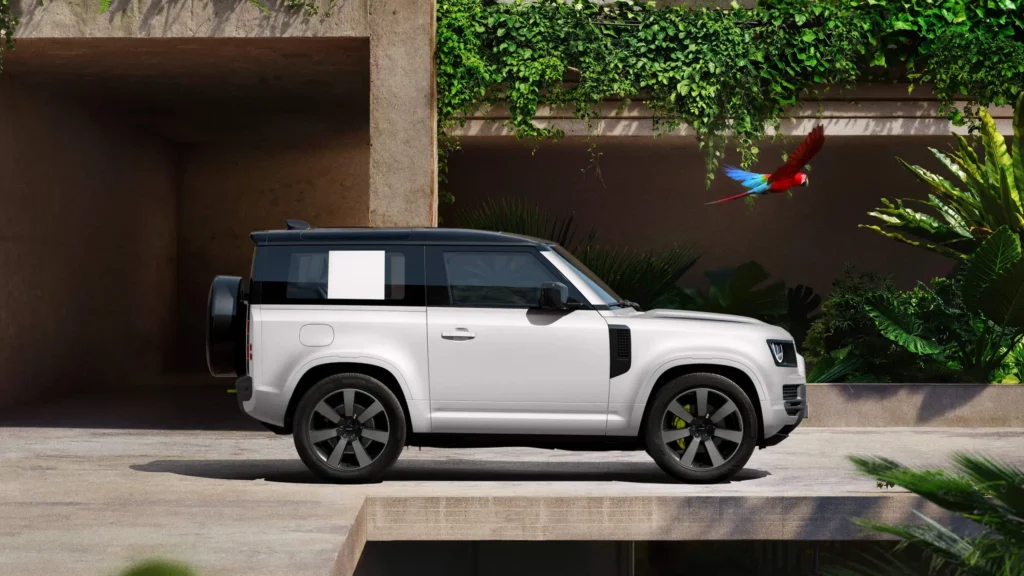
The modern Defender isn’t marketed as a basic utility vehicle. It competes in the premium SUV market, which means buyers are paying for the interior, technology, materials, brand positioning and customization as well as the underlying 4×4 capability.
2. Serious off-road engineering
The Defender 90 isn’t simply a luxury crossover wearing an off-road-inspired design.
Its hardware includes all-wheel drive, an eight-speed automatic transmission, a twin-speed transfer box and Land Rover’s Terrain Response system. Driver-assistance and off-road technologies include hill-descent control, electronic traction control, a 3D surround camera and a 360-degree parking system.
3. Powerful engines
Engine choice has a major impact on the price.
The current Defender range has offered everything from turbocharged four-cylinder power to high-output V8 configurations. The 2026 Defender 90 was particularly unusual because the short-wheelbase model was offered exclusively with a 518-hp supercharged 5.0-liter V8.
4. The two-door factor
Two-door SUVs are relatively uncommon in the luxury market.
That makes the Defender 90 more distinctive than a conventional four-door premium SUV. Buyers aren’t necessarily paying for additional practicality; they’re paying for a vehicle with a particular design and personality.
5. Options can dramatically increase the final price
The advertised starting price is only the beginning.
Wheels, paint, interior packages, technology, off-road equipment and other options can push the final price substantially above MSRP. Land Rover itself notes that retailer pricing, equipment and availability can vary.
Land Rover Defender 90 Performance
Performance depends on the model year and engine.
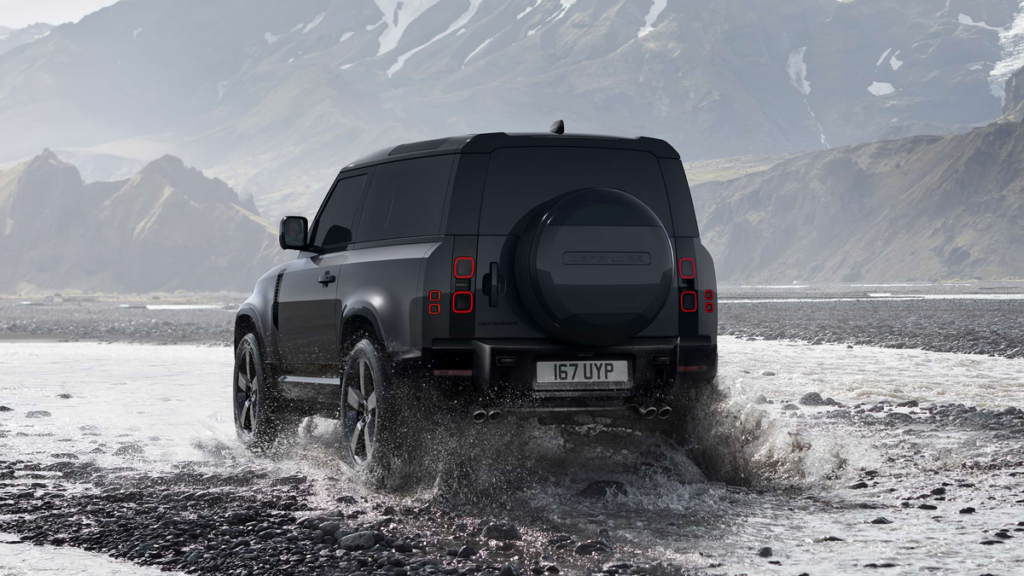
For example, the 2026 Defender 90 V8 produced 518 horsepower and 461 lb-ft of torque from a supercharged 5.0-liter V8 paired with an eight-speed automatic transmission.
Car and Driver tested a V8-powered Defender 90 and recorded a 4.4-second 0–60 mph time, demonstrating that the short Defender can be surprisingly quick despite its off-road-oriented shape.
The newer Defender lineup has also introduced changes to its powertrain strategy. For 2027, the Defender range is being simplified, while the new Vertex trim joins the lineup.
This is important for shoppers because a Defender 90 advertised online could have dramatically different performance depending on its model year.
How Fast Can the Defender 90 Go?
The answer depends on the engine, wheels and model year.
The Defender isn’t primarily designed as a high-speed sports SUV. Its engineering priorities are off-road traction, stability, ground clearance and durability.
Nevertheless, V8 versions can be genuinely fast. Car and Driver recorded a 4.4-second 0–60 mph time with a 518-hp Defender 90 V8.
Land Rover also notes that Defender models fitted with 22-inch wheels can have a maximum speed of 130 mph, although exact maximum speed varies with configuration.
The more interesting point is that the Defender 90 doesn’t need sports-car acceleration to be impressive. Its appeal comes from being able to transition from highway driving to difficult terrain without changing its fundamental character.
Defender 90 Off-Road Capability
This is where the Defender 90 separates itself from many luxury SUVs.
The vehicle uses a sophisticated four-wheel-drive system with a low-range transfer box and electronic traction management. Terrain Response allows the driver to adapt the vehicle’s behavior to different surfaces and conditions.
The modern Defender also has impressive ground clearance and water-wading capability. Car and Driver lists up to 11.5 inches of ground clearance and the ability to ford up to 35 inches of water for the Defender range, depending on configuration.
But the biggest advantage of the 90 is its compact footprint.
On a narrow trail, a shorter vehicle can be easier to position between rocks, trees and other obstacles. That doesn’t automatically make the 90 better than a Defender 110 in every off-road situation, but it gives the short-wheelbase model a particular advantage in tight environments.
Defender 90 Interior and Technology
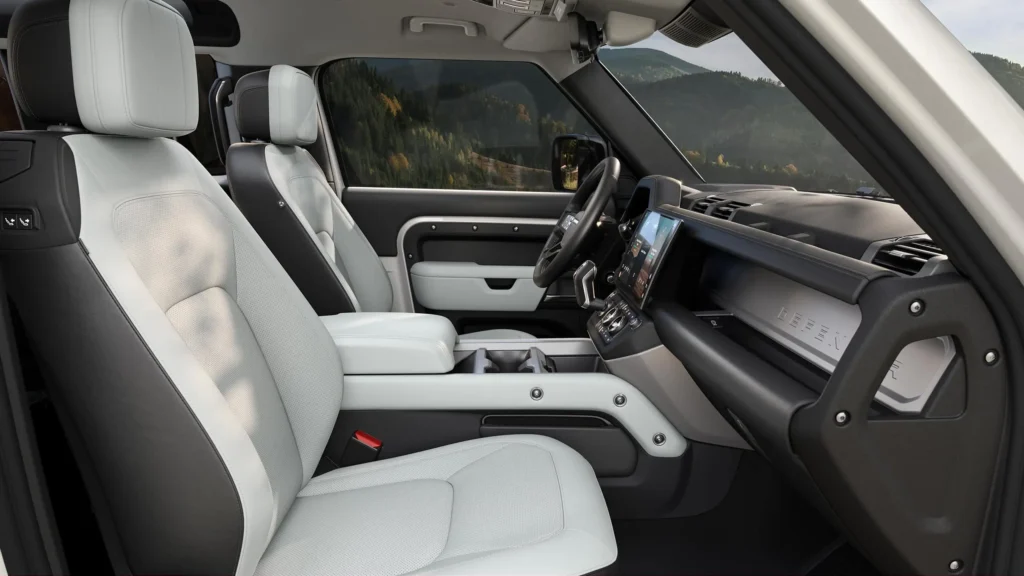
Inside, the Defender combines rugged styling with modern luxury.
Rather than hiding every structural element behind soft-touch materials, Land Rover intentionally incorporates exposed and utilitarian-looking components into the cabin.
The result is different from the traditional luxury-SUV formula.
Newer Defenders feature large digital displays and advanced driver-assistance technology. Land Rover lists features such as adaptive cruise control, lane-keep assist, blind-spot assistance, emergency braking and a 3D surround camera among the available systems.
The short body does create a compromise, however.
If maximum rear-seat comfort and cargo space are priorities, the Defender 110 or 130 will generally be the more logical choice.
The Defender 90 is about choosing character over maximum practicality.
Is the Defender 90 Good for Everyday Driving?
Surprisingly, yes.
The modern Defender 90 was designed to be much more civilized on pavement than the classic Defender. It has a comfortable cabin, automatic transmission, modern safety systems and sophisticated suspension.
However, its boxy shape and off-road hardware mean fuel economy isn’t a major strength.
For example, the 2026 Defender 90 V8 is rated at approximately 15 mpg city and 19 mpg highway, according to Kelley Blue Book.
Therefore, the Defender 90 makes the most sense for someone who wants a luxury vehicle that can handle everyday driving while retaining authentic off-road capability.
If all you need is a comfortable city SUV, there are more efficient choices.
Classic vs Modern Land Rover Defender 90
This is an important distinction that is frequently missed in online searches.
The classic Defender 90 and the modern Defender 90 share a name and heritage, but they are fundamentally different vehicles.
The original U.S.-market Defender 90 arrived in 1993 and was sold through 1997. Hagerty notes that roughly 2,000 were imported annually and that U.S. examples used a 182-hp 3.9-liter V8.
A period test by Car and Driver recorded a 0–60 mph time of 10.2 seconds and a governor-limited top speed of 86 mph for a 1994 Defender 90.
Compare that with a modern V8 Defender 90 reaching 60 mph in 4.4 seconds in Car and Driver testing.
The name is the same, but the ownership experience is completely different.
The classic version is increasingly treated as a collector vehicle, while the modern version is a contemporary luxury SUV.
Will the Defender 90 Go Up in Value?
This is where expectations need to be realistic.
A Defender 90 can become collectible, but buying a new one solely because you expect it to appreciate is risky.
Historical Defenders have stronger collector appeal because their production history, scarcity, originality and iconic design give them a different market position.
Modern Defenders generally behave more like luxury vehicles when it comes to depreciation.
For example, iSeeCars estimates that a Land Rover Defender retains about 53.9% of its value after five years, making the Defender the best-reselling Land Rover model in its 2026 analysis.
But that doesn’t mean every Defender 90 will appreciate.
Kelley Blue Book’s data illustrates the difference between individual specifications. A 2025 Defender 90 V8 had lost roughly 32% of its value after one year in its September 2026 valuation data, while a 2023 Defender 90 Carpathian Edition had lost approximately 40% over three years.
The takeaway is simple:
A Defender 90 may hold value better than many luxury SUVs, but depreciation is still a real ownership cost.
If appreciation is your goal, rarity, condition, mileage, original specification, service history and long-term enthusiast demand will matter much more than simply owning the “Defender 90” name.
What Makes a Defender 90 Potentially Collectible?
There is an interesting difference between “resale value” and “collectibility.”
Resale value measures what the market is willing to pay for a used vehicle.
Collectibility is about whether enthusiasts eventually consider a particular vehicle desirable enough to preserve.
The Defender 90 has several characteristics that could support long-term enthusiast interest:
- Short-wheelbase two-door configuration
- Strong visual identity
- Long Land Rover heritage
- Limited production of particular versions
- High-performance V8 models
- Special editions
- Low-mileage, original examples
- Strong aftermarket and enthusiast communities
That doesn’t guarantee appreciation.
In fact, heavily modified vehicles can sometimes be less desirable to collectors than exceptionally preserved original examples.
For anyone considering a Defender 90 as a future collectible, condition and provenance may ultimately matter more than simply buying the most expensive specification today.
Used Land Rover Defender 90: What Should You Check?
Buying a used Defender 90 requires more than comparing mileage and asking price.
Before purchasing, check:
Service history
A complete service history can be more valuable than a slightly lower odometer reading.
Accident history
Check for previous collision damage, especially structural repairs.
Off-road use
A Defender built for off-road driving will naturally attract owners who use it that way. Look underneath the vehicle for evidence of serious trail use.
Tires and wheels
Large wheels and performance-oriented tires can be expensive to replace.
Electronic systems
Because modern Defenders contain substantial electronic technology, verify that cameras, displays, driver-assistance systems and other features operate correctly.
Modifications
Accessories can be useful, but poorly executed modifications can create future maintenance problems.
Defender 90 vs Defender 110: Which Should You Buy?
Choose the Defender 90 if you value:
- Two-door styling
- Compact dimensions
- Easier maneuverability
- Strong visual identity
- Serious off-road capability
- A more distinctive driving experience
Choose the Defender 110 if you need:
- More rear passenger space
- Easier family use
- More practical cargo capacity
- Four-door convenience
The Defender 130 makes even more sense if maximum passenger and cargo capacity is the priority.
The 90 is therefore not the “best” Defender for everyone.
It is the Defender for buyers who specifically want the short-wheelbase character.
Is the Land Rover Defender 90 Worth It?
For the right buyer, yes.
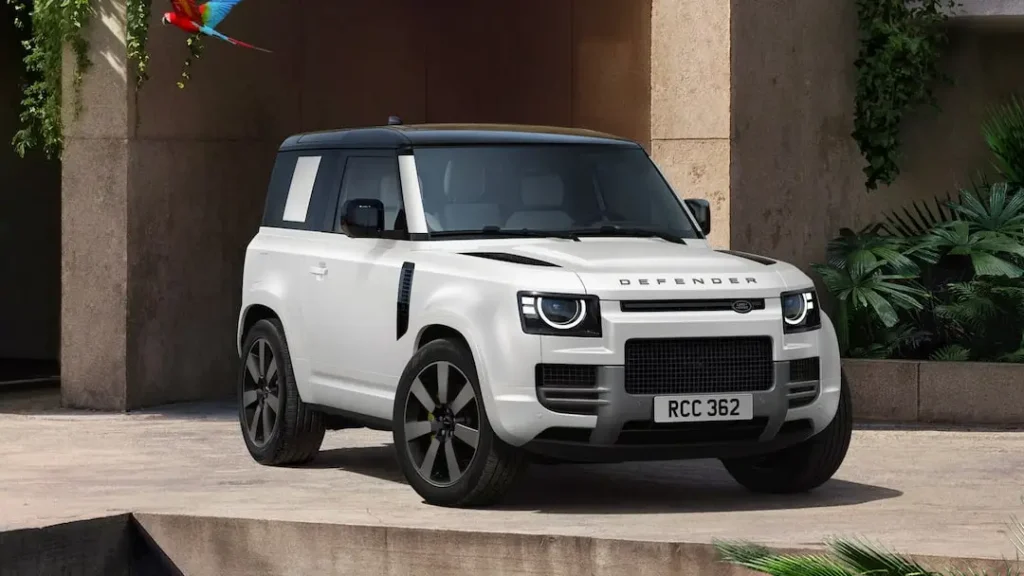
The Defender 90 occupies a rare position in the automotive market. It offers the image and comfort of a luxury SUV while maintaining genuine off-road hardware and a compact two-door configuration.
Its biggest weaknesses are equally clear: the price can become extremely high, fuel economy is not impressive, rear access isn’t as convenient as a four-door SUV, and depreciation remains a concern.
The smartest way to approach the Defender 90 is therefore not to ask whether it is objectively worth its price.
Ask whether its combination of design, capability and exclusivity is worth the premium to you.
If you simply need transportation, probably not.
If you want a luxury SUV that can take you from a city street to a remote trail while looking unmistakably different from everything else in the parking lot, the Defender 90 makes a much stronger argument.
Conclusion
The Land Rover Defender 90 isn’t expensive simply because it is a Land Rover.
You’re paying for a combination of luxury, engineering, off-road capability, heritage, customization and perhaps most importantly the unusual two-door short-wheelbase design.
The classic Defender 90 has already demonstrated collector appeal, while the modern Defender 90 is establishing its own identity as a luxury performance off-roader.
For buyers who want practicality above everything else, the Defender 110 is probably the better choice.
For buyers who want something smaller, more distinctive and more engaging, the Defender 90 is the Defender to watch.
And if you’re considering one as a long-term purchase, the most important question isn’t simply how much it costs today. It’s which specification, condition and history will still make people want it years from now.
Frequently Asked Questions
How much is a Land Rover Defender 90 in the USA?
The current U.S. Defender 90 is listed by Land Rover at approximately $61,000 before destination charges, taxes, title, registration, dealer fees and options. Actual pricing varies by model year, trim and equipment.
Is the Defender 90 available in the USA?
Yes. The Land Rover Defender 90 is officially offered in the United States. Land Rover’s U.S. website currently lists the Defender 90 alongside the larger Defender 110 and Defender 130.
Will Defender 90 go up in value?
It is possible for particularly rare, original or historically significant Defender 90s to become more collectible, but appreciation is not guaranteed. Modern Defenders still experience depreciation. iSeeCars estimates that the broader Defender model retains about 53.9% of its value after five years, while individual Defender 90 trims can depreciate considerably more or less depending on mileage, condition and specification.