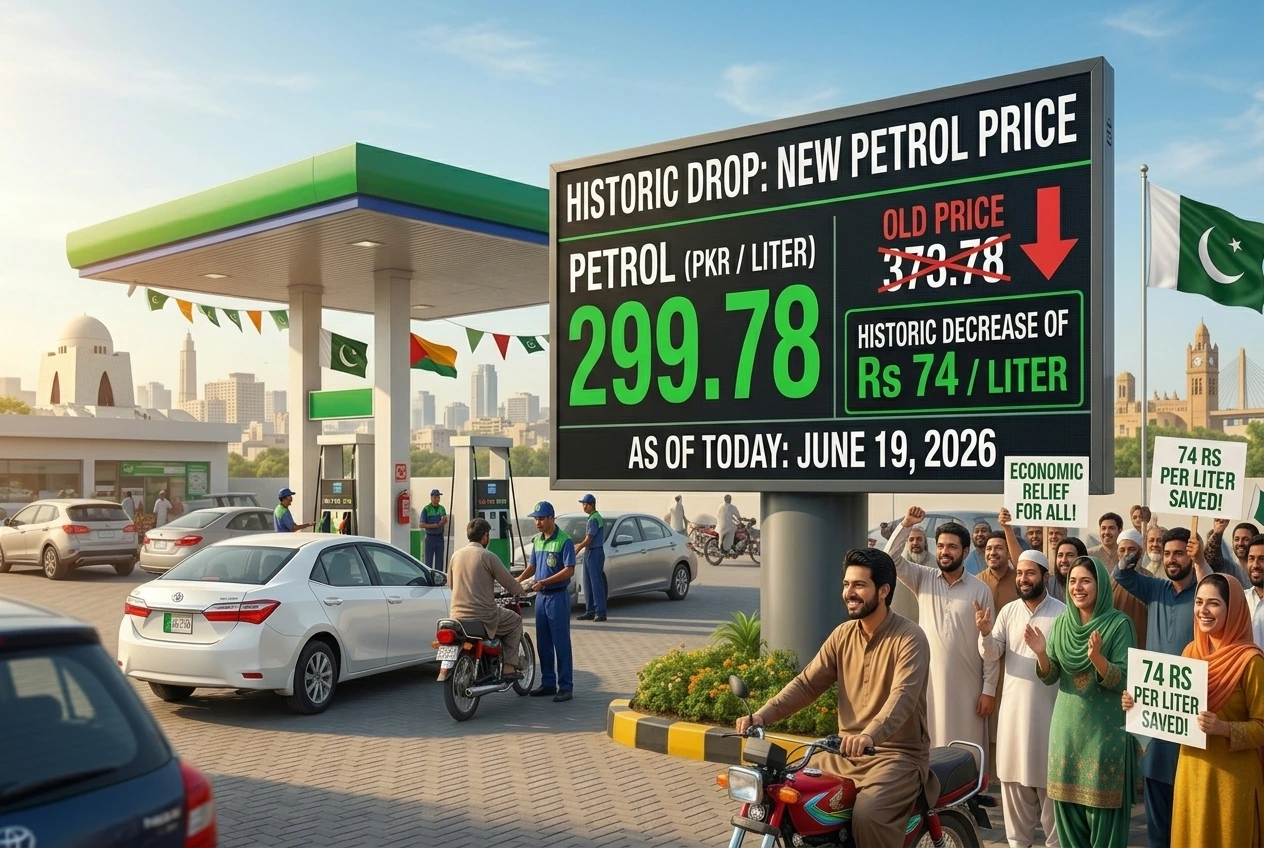
Prime Minister Shehbaz Sharif has announced a historic reduction in petrol prices, effective June 19, 2026. This substantial cut slashes the petrol price from an exorbitant 373 rupees and 78 paisa to a more manageable 299 rupees and 78 paisa, a decrease of 74 rupees. This decision is poised to provide relief to consumers across the nation, highlighting the government’s commitment to economic stability. As you delve into the details, explore the implications of this transformative policy change for Pakistan’s future.
1. A Historic Shift: Understanding the New Petrol Price in Pakistan
a) Overview of the Price Reduction
On June 19, 2026, a significant reduction in petrol prices was announced by Prime Minister Shehbaz Sharif. Previously, the petrol price in Pakistan stood at a high of 373 rupees and 78 paisa per liter. The new petrol price, however, slashed this figure down to 299 rupees and 78 paisa, marking a 74 rupee decrease. This adjustment symbolizes a monumental shift, bringing much-needed relief to consumers burdened by escalating fuel costs, which have long been a source of economic strain across the country.
b) Economic Implications
The latest petrol price cut has profound implications for Pakistan’s economy. Lower fuel costs can translate into reduced transportation expenses, subsequently easing the operational costs for businesses. This alleviation could spur economic activity and potentially stabilize goods prices, fostering broader financial stability. By addressing such fundamentals, the government aims to not only curb living expenses but also invigorate the business environment.
c) Reaction and Impact
The response to the new petrol price in Pakistan today has been one of widespread approval. Citizens and industry experts alike recognize the move as a strategic effort to boost the nation’s economic outlook. This proactive measure is viewed as a step toward sustainable development, enhancing the affordability of travel and transport, and elevating the overall quality of life for many Pakistanis. By implementing this substantial fuel price reduction, the government showcases its commitment to continuous reform and economic resilience.
2. Analyzing the Impact of the Latest Fuel Price Reduction
a) Economic Relief for Consumers
The recent announcement by PM Shehbaz Sharif, reducing the petrol price in Pakistan by a substantial 74 rupees per liter as of today’s date June 19, 2026 marks a pivotal moment for the nation’s economy. This change lowers to 299 rupees and 78 paisa. For many households, this reduction in fuel costs can translate to significant savings. Particularly against the background of rising commodity prices. This decision is poised to ease the financial burden on families and stimulate consumer spending.
b) Industry and Economic Growth
The reduction in the new petrol price in Pakistan today also has profound implications for industry and economic growth. Lower fuel costs can decrease production expenses across various sectors, from manufacturing to agriculture, thereby potentially improving profit margins. In turn, this could lead to increased investment in capacity, innovation, and employment. This positive cycle encourages economic development and allows Pakistani businesses to become more competitive internationally.
c) Global Context and Regional Dynamics
Globally, the surge in fuel prices, exacerbated by geopolitical tensions, had previously evoked economic stress across multiple countries. In this context, Pakistan’s ability to adjust its fuel pricing offers a blueprint for adaptive economic policies that prioritize domestic stability over fluctuating global trends. Despite similar pressures, nations like India managed to keep increases relatively low, reinforcing the importance of strategic economic governance. The latest petrol price strategy can potentially place Pakistan in a strong position within the regional energy and economic landscape, fostering resilience against future global market upheavals.
3. What the New Petrol Price Means for Consumers and the Economy Today
a) Consumer Relief and Household Benefits
The announcement of a new petrol price in Pakistan marks a significant moment for consumers nationwide. On June 19, 2026, Prime Minister Shehbaz Sharif unveiled a historic decrease in the fuel price, slashing the petrol rate by Rs74 per litre from 373 rupees and 78 paisa to a more manageable 299 rupees and 78 paisa. This bold move offers immediate financial relief to households struggling with escalating living costs. Reduced fuel expenses typically translate into savings, freeing up resources for other essential needs and potentially boosting domestic consumption. This shift in the latest petrol price holds particular promise for low- and middle-income families, providing them with increased financial breathing room.
b) Boosting Transportation and Business Sectors
For businesses, especially transport operators and logistics companies, the new petrol price in Pakistan today signifies a turning point in reducing operational costs. By lowering fuel prices, companies can cut down on one of their primary expenses, which, in turn, can be passed on to consumers through lower product and service prices. This adjustment is particularly timely, as it aligns with global trends where easing geopolitical tensions have reduced crude oil prices, thus lowering import costs significantly. Enhanced affordability in transport can lead to improved efficiencies and competitiveness in both domestic and international markets.
c) Economic Implications: Easing Inflation and Promoting Growth
Economically, the reduction in fuel price is anticipated to exert a positive influence by curbing inflation. It eases the costs associated with the production and transportation of goods, potentially leading to lower prices in the market. Additionally, the move may bolster economic growth as businesses reinvest their savings into expansion and development initiatives. By reflecting global energy market trends, the government’s decision complements broader economic policies aimed at stabilizing economic conditions and encouraging sustainable development. The new fuel price is a strategic measure designed to support economic resiliency by safeguarding consumers and bolstering market stability.
Conclusion
As of June 19, 2026, you are witnessing a historic shift in Pakistan’s fuel pricing landscape. Under the leadership of Prime Minister Shehbaz Sharif, the petrol price has been slashed by a remarkable 74 rupees, bringing it down to 299 rupees and 78 paisa from the previous 373 rupees and 78 paisa. This decisive action not only provides immediate financial relief to countless citizens but also signals a strategic move towards economic stabilization. As you navigate these changes, consider the broader implications for both the national economy and your daily life, underscoring the significance of proactive governance in challenging times.
Leave a Reply